
SPECIAL SESSION #09
Sensing systems for sustainable electronics
ORGANIZED BY
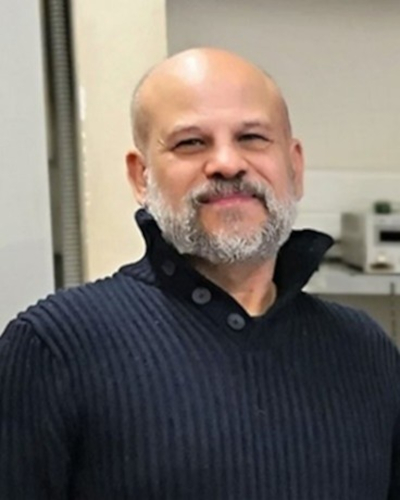 Salvatore Graziani
Salvatore Graziani
University of Catania, Italy
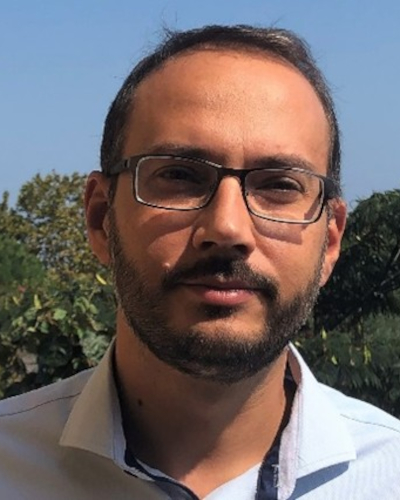 Luca Patanè
Luca Patanè
University of messina, Italy
 Mattia Scagliotti
Mattia Scagliotti
Italian National Research Council (IMM-CNR)
 Carlo Trigona
Carlo Trigona
University of Catania, Italy
 Antonio Valletta
Antonio Valletta
Italian National Research Council (IMM-CNR)
 Maria Gabriella Xibilia
Maria Gabriella Xibilia
University of Messina, Italy
SPECIAL SESSION DESCRIPTION
Silicon-based electronics face increasing limitations in supporting the transition toward truly green sensing systems. At the core of this challenge lies the growing importance of sustainable electronics, built on novel materials and technologies capable of meeting evolving environmental requirements. It is essential to develop fabrication processes and devices that rely on renewable raw materials, significantly reduce energy consumption, and ensure minimal environmental impact at end of life.
Sensing technologies must be reimagined through the lens of sustainability: minimizing energy demand, reducing reliance on non-renewable materials, and ensuring devices that can be safely disposed of, recycled, or even biodegraded. A key objective is the development of powering systems, capable of operating even in resource-constrained environments. Powering systems should also progressively move away from fossil fuels, embracing lower-impact and energy-efficient solutions.
More broadly, the entire life cycle of electronic devices should be considered according to the principles of sustainable electronics, enabling a more accurate assessment and reduction of their environmental footprint. This includes not only fabrication and operation, but also end-of-life management. The global e-waste challenge highlights the urgency of this transition: improper disposal can release hazardous substances, while a significant share of e-waste is processed in developing countries under unsafe conditions, increasing pollution and causing serious health risks for workers.
A truly circular economy therefore calls for the development of unconventional technologies that complement—and progressively transform—traditional electronics manufacturing. This transition is further driven by the growing demand for sustainable electronic devices in key sectors such as Industry 5.0, precision agriculture, and smart cities. Their large-scale deployment will require mass production, with the risk of exacerbating the e-waste problem if sustainability is not fully integrated.
In this context, this session places sustainable electronics at its core, bringing together new research on bio-derived materials, emerging technologies, innovative devices, and modeling approaches aimed at advancing environmentally responsible, energy-efficient electronics.
ABOUT THE ORGANIZERS
Salvatore Graziani received the M.S. degree in electronic engineering and the Ph.D. degree in electrical engineering from the Università degli Studi di Catania, Italy, in 1990 and 1994, respectively. Since 1990, he has been with the Dipartimento di Ingegneria Elettrica, Elettronica e Informatica, Università di Catania, where he is a Full Professor of Electric and electronic measurement and instrumentation. His primary research interests lie in the field of sensors, polymeric sensors and actuators. He has coauthored several scientific papers and books.
Luca Patanè received the degree in Computer Science Engineering and the Ph.D. degree in Automation and Electronic Engineering from the University of Catania, Italy, in 2001 and 2005, respectively. He is currently a Research Fellow in Automatic Control Systems at the University of Messina, Italy. His research activities focus on nonlinear systems modeling and control; system identification and soft sensor development; neural networks and learning systems; legged locomotion and insect-inspired control systems; modeling and control of bio-inspired robots. He published more than 130 technical papers and several chapters in books in the field of control and bio-robotics.
Mattia Scagliotti is a condensed matter physicist at the Institute for Microelectronics and Microsystems in Rome, part of the National Research Council of Italy (CNR). He obtained his Ph.D. in Physics in 2021 from the University of Rome “Tor Vergata”. His doctoral research focused on two-dimensional materials such as graphene, carbon nanotubes, and topological insulator thin films for next-generation photodetectors. In recent years, his work has centered on organic and flexible electronics, including the development of transistors based on innovative organic semiconductors fabricated with green processing techniques, particle detectors employing organic semiconductors for applications in nuclear medicine, and neuromorphic circuits. He is also engaged in the development of green electronics on biocompatible substrates such as bacterial cellulose. His research further addresses topics of strong industrial relevance, including metalenses, advanced transistor and circuit design for high-power devices based on wide-bandgap semiconductors.
Carlo Trigona an Associate Professor at the University of Catania, is a seasoned academic with a strong background in sensors and transducers. His journey began with an M.S. degree, followed by a Ph.D. in Electronics, Automation, and Control of Complex Systems. With extensive postdoctoral experience across Europe, including France and Germany, he returned to Catania, where he has made significant contributions to his department. Currently, he serves as the Director's Delegate for Research and President of the Master’s Degree Program in Electrical Engineering for Sustainable Green Energy Transition. Prof. Trigona’s influence extends beyond academia through his participation in national and international projects. He has received several prestigious awards for his research, including the 2020 IEEE I&M Outstanding Young Engineer Award for his contributions to the advancement of instrumentation and measurement concepts in sensors and transducers for energy harvesting. Additionally, he was honored with the 2023 IEEE I&M Best Application Award for his development of innovative sensors that integrate plant responses to a wide range of environmental factors, creating low-impact, environmentally friendly, and biodegradable instruments. His research, spanning over 250 publications with more than 3000 citations, focuses on sensors, energy harvesting, and innovative green technologies.
Antonio Valletta is a Senior Researcher at the Institute for Microelectronics and Microsystems of the Italian National Research Council (IMM-CNR). His work focuses on the characterization, simulation, and physical modeling of semiconductor devices, including thin-film transistors (TFTs and organic TFTs), amorphous silicon photovoltaic devices, silicon carbide (SiC) power transistors, and gallium nitride (GaN)-based devices. He is also involved in the development and implementation of electrical compact models for SPICE-like circuit simulation environments.
Maria Gabriella Xibilia received the M.S. degree in Electronic Engineering and the Ph.D. degree in Electrical Engineering from the University of Catania, Italy, in 1991 and 1995, respectively. Since 1998, she has been with the Department of Engineering, University of Messina, Italy, where she is currently an Associate Professor of Automatic Control. She co-authored more than 140 scientific papers and 5 books. Her current research interests include system identification, soft sensors, process control, nonlinear systems, fractional order systems and machine learning.