SPECIAL SESSION #08
Food Traceability: Geographical Origin, Quality, Sustainability And Varietal Assessment
ORGANIZED BY
 Gabriella Tamasi
Gabriella Tamasi
University of Siena - Biotechnology, Chemistry and Pharmacy Department, Italy
 Michele Baglioni
Michele Baglioni
University of Siena - Biotechnology, Chemistry and Pharmacy Department, Italy
 Alessandro Donati
Alessandro Donati
University of Siena - Biotechnology, Chemistry and Pharmacy Department, Italy
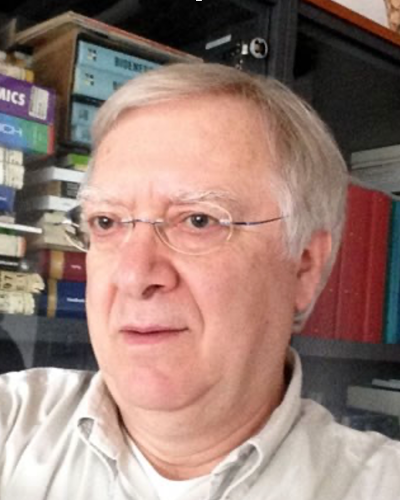 Claudio Rossi
Claudio Rossi
University of Siena - Biotechnology, Chemistry and Pharmacy Department, Italy
SPECIAL SESSION DESCRIPTION
Food traceability is crucial in the context of sustainable modern agrifood productions, ensuring product authenticity, quality, and safety in an increasingly globalized market. The assessment of geographical origin, production practices, and varietal identity is essential to protect high-value products, prevent fraud, and comply with regulatory frameworks. This becomes particularly important in circular approaches, where also byproducts can be exploited as valuable new resources.
A wide range of advanced analytical techniques is currently employed to address these challenges. Chromatographic, spectroscopic, and spectrometric methods (e.g., HPLC, GC-MS, LC-MS, ICP-MS, NMR, IR or UV-VIS spectroscopy, etc.) enable detailed chemical and elemental profiling of food matrices. In addition, isotopic analyses — such as isotope ratio mass spectrometry (IRMS) and multi-elemental approaches via ICP-MS — are powerful tools for tracing geographical origin. Complementary genetic methods (DNA-based analyses) further support the identification of botanical and varietal origin.
The integration of these heterogeneous datasets through chemometric and multivariate approaches allows for robust classification, discrimination, and predictive modeling. Data fusion strategies, combining information from multiple analytical platforms, further enhance accuracy and reliability in traceability studies and represents the main advancement in the field.
This Special Session aims to gather interdisciplinary contributions focused on innovative analytical and data-driven approaches for food authentication. Emphasis will be placed on reliable, reproducible, and effective methodologies for assessing geographical origin, quality, and varietal identity across diverse agrifood products.
TOPICS
Topics include, but are not limited to:
- Case studies on geographical traceability of agrifood products using analytical, spectroscopic, and spectrometric techniques;
- Quality assessment in modern sustainable food systems and circular economy of agrifood productions;
- Isotopic ratio analysis for origin and authenticity assessment;
- Genetic analyses for geographical and varietal traceability;
- Data fusion strategies for integrating multi-source analytical data;
- Innovative analytical approaches for food authentication and traceability;
- Advanced chemometric and data analysis methods, including machine learning and artificial intelligence;
- Detection of food fraud, adulteration, and mislabeling.
ABOUT THE ORGANIZERS
Gabriella Tamasi graduated in Chemistry in 2001 and earned her PhD in Chemical Sciences in 2007 from the University of Siena, where she is currently Associate Professor of Analytical Chemistry. Since 2023, she has been a permanent member of the PhD Programme in Advanced and Sustainable Agricultural and Forest Systems and serves as Coordinator of the Master’s Degree Programme in Chemistry for Agro-Food Sciences. Her research activities focus on the combined use of spectroscopic and spectrometric techniques together with multivariate chemometric methods for the geographical traceability of agro-food products; the optimization of extraction methods and chemical characterization of nutraceutical compounds in plant matrices; the study of high-efficiency agricultural and agro-industrial systems through the valorisation of by-products; and the investigation of nutraceutical components in natural products together with the evaluation of their biological effects.
Gabriella Tamasi has co-authored 100 papers in international peer-reviewed journals (Scopus h-index: 25).
Michele Baglioni graduated in Science for Cultural Heritage in 2007 and got his PhD in Science for Cultural Heritage Conservation in 2011, both at the University of Florence. He is currently Associate Professor of Physical Chemistry at The University of Siena. Since 2023, he has been a permanent member of the PhD Programme in Advanced and Sustainable Agricultural and Forest Systems (coordinated by the Universities of Florence, Siena and Pisa) and serves as Coordinator of the Chemistry bachelor degree course at the University of Siena. His research activity was devoted to develop soft matter systems (e.g. microemulsions, nanostructure fluids, and gels) for the conservation of art objects, to the development and characterization of gelled carriers for the controlled delivery of bioactive compounds to agricultural soils, to food colloids and to assess the geographical origin of agrifood products, mainly olive oil and wine, by means of spectroscopic and spectrometric analytical techniques coupled with chemometric methods. He is coauthor of 45 papers in international peer-reviewed journals (Scopus h-index: 22).
Alessandro Donati serves as an Associate Professor of Physical Chemistry at the University of Siena. His scientific career has been primarily dedicated to the application of Nuclear Magnetic Resonance (NMR) spectroscopy, specifically focused on the structural and dynamic characterization of molecules within the biological, pharmaceutical, and agri-food sectors. Through an interdisciplinary approach, his research has evolved to integrate state-of-the-art spectroscopic techniques into the fields of archaeology and cultural heritage conservation, focusing on non-invasive analyses and preservation of historical artifacts, and bridging the gap between advanced chemical physics and the humanities.
Claudio Rossi is professor Emeritus of Physical Chemistry at the University of Siena. His scientific activity, documented in over 280 international publications, spans three main pillars:
- Nuclear Magnetic Resonance (NMR) - Advanced theoretical and applied studies on the structural and dynamic properties of biomolecules, developed through collaborations with the University of Wisconsin-Madison and UC San Francisco. Expertise includes ligand-receptor interactions and metabolic modeling.
- Environmental Thermodynamics - Development of mathematical models and evolutionary thermodynamic parameters (exergy, emergy) to assess ecosystem sustainability. Extensive fieldwork across Italy, Latin America, and Africa, funded by EU-INCO and CIRCLE-MED programs.
- AgriFood Science - Development of objective spectroscopic, spectrometric and multivariate methods for the geographical traceability and quality profiles of agricultural products. Research also focuses on identifying bioactive and biocidal natural compounds. He was the scientific leader for major national and regional projects, including MIUR-funded PON Direct Food and Pro-Food IV, as well as in collaborations with industry partners.