SPECIAL SESSION #05
Sensors, Biosensors and Systems for Plant Monitoring
ORGANIZED BY
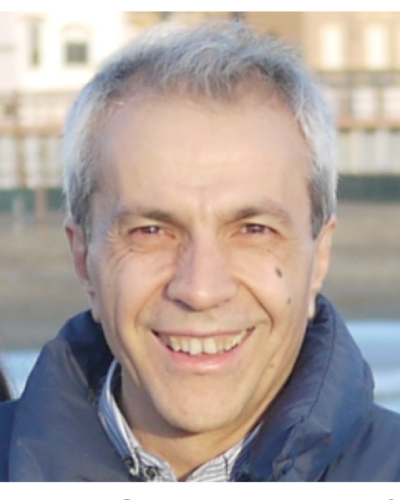 Domenico Caputo
Domenico Caputo
Department of Information Engineering, Electronics and Telecommunications, Sapienza University of Rome, Rome Italy
 Francesca Costantini
Francesca Costantini
Research Centre for Plant Protection and Certification, Council for Agricultural Research and Economics (CREA-DC), Rome, Italy
 Massimo Reverberi
Massimo Reverberi
Department of Environmental Biology, Sapienza University of Rome, Rome Italy
SPECIAL SESSION DESCRIPTION
The growing need for sustainable agriculture and climate-resilient ecosystems is fostering the development of advanced sensing technologies for plant monitoring. This special session aims to highlight recent advances in sensors and biosensors for investigating plant physiology, health status, and interactions with the environment, in line with the objectives of green technologies and ecological sustainability.
TOPICS
The session will address different research topics, including:
- chemical and biological sensors for the detection of plant metabolites, pathogens, and stress-related biomarkers;
- electrophysiological sensing techniques for monitoring plant electrical signals and understanding signaling pathways under biotic and abiotic stress;
- artificial intelligence and data-driven methods for processing complex plant-derived datasets and enabling predictive diagnostics;
- flexible and wearable sensing platforms for continuous, in vivo plant monitoring;
- remote sensing technologies, including imaging and satellite-based approaches, for large-scale crop and ecosystem assessment;
- integrated sensing architectures combining multiple transduction mechanisms for comprehensive plant phenotyping.
By fostering collaboration among experts in sensing technologies, plant science, and data analytics, this session aims to promote innovative solutions for precision agriculture, improved resource management, and enhanced crop resilience. These advances are expected to contribute significantly to sustainable food production and environmental protection.
ABOUT THE ORGANIZERS
Domenico Caputo (Member IEEE) was born in Tradate (VA), Italy in 1963. He received the cum laude Electronic Engineering degree in Electronic Engineering from Sapienza University of Rome, Rome, Italy. He is Professor at the Department of Information Engineering, Electronics and Telecommunications of the same University.
His main research fields concerned the development of amorphous silicon photodetectors for detection of radiation from the UV to the near infrared range and of innovative electronic devices based on amorphous silicon materials. The present research interests are focused on the development of lab-on-chip system integrating thin film sensors and actuators for DNA amplification and mycotoxin detection. He is referee of several scientific journals, author of more than 200 articles in international journals and proceedings of international conferences and principal investigator of several national and international projects.
Francesca Costantini earned her Master’s degree in Pharmaceutical Chemistry and Technology (CTF) from the University of Bologna in October 2003. In February 2005, she began her Ph.D. studies at the University of Twente (Enschede, The Netherlands) within the Supramolecular Chemistry and Technology and Molecular Nanofabrication groups. She obtained her Ph.D. in Chemistry in December 2009, with research focused on the immobilization of organic, nanometallic, and enzymatic catalysts in microfluidic systems.
From December 2010 to November 2019, Francesca worked as a researcher at Sapienza University of Rome, where she specialized in the development of Lab-on-Chip (LoC) systems for healthcare and agrifood applications. Between 2019 and 2023, she was a researcher at the Research Centre for Plant Protection and Certification (CREA-DC) in Rome, focusing on the development of diagnostic protocols for bacterial plant pathogens.
From 2023 to September 2024, she joined the Department of Environmental Biology at Sapienza University of Rome as a researcher within the Agritech project, contributing to the development of Lab-on-Chip systems for the detection of mycotoxins in cereals. Since 2024, she has been a researcher at CREA-DC, where her work focuses on the use of Lab-on-Chip technologies for the detection of plant pathogens (bacteria, fungi, and viruses), their harmful metabolic products in food, as well as parasites and also the study of agrochemicals with low environmental footprint.
She is the author or co-author of one patent and more than 50 publications in international journals and conference proceedings.
Massimo Reverberi graduated cum laude in Biology in 1996 and obtained his PhD in Botany in 2001 in Sapienza, Università di Roma, where he is currently associate Professor in Molecular Plant Pathology and from 2009, a permanent member of the PhD school in in Environmental and Evolutionary Biology. His studies focus on the multiple interactions environment-plant-pathogens in particular regarding the relation among oxidative stress, lipid signals and the biosynthesis of several mycotoxins in different pre- and post-harvest fungal pathogens. He participated to several European project on the control of the biosynthesis of some mycotoxins in different foodstuffs and on the application of the integrated control against fungi responsible for post-harvest spoilages. He was coordinator in several Research Unit of National Project among which one funded by MIUR on the use of PUFA from Antarctic fungi as feed additives. Massimo Reverberi has authored or co-authored almost 60 peer-reviewed, ISI-indexed publications on various aspects of plant pathology, mycology and microbiology and attended as speaker several International Congresses.